Jul 12, 2026Tech Insights
Magnetic Wireless Charging: How It Works & Why It Matters
Magnetic wireless charging uses electromagnetic induction and built-in magnets for perfect alignment. While slower than wired charging, it offers unmatched convenience for daily use. With Qi2 standard
The Science Behind Wireless Power
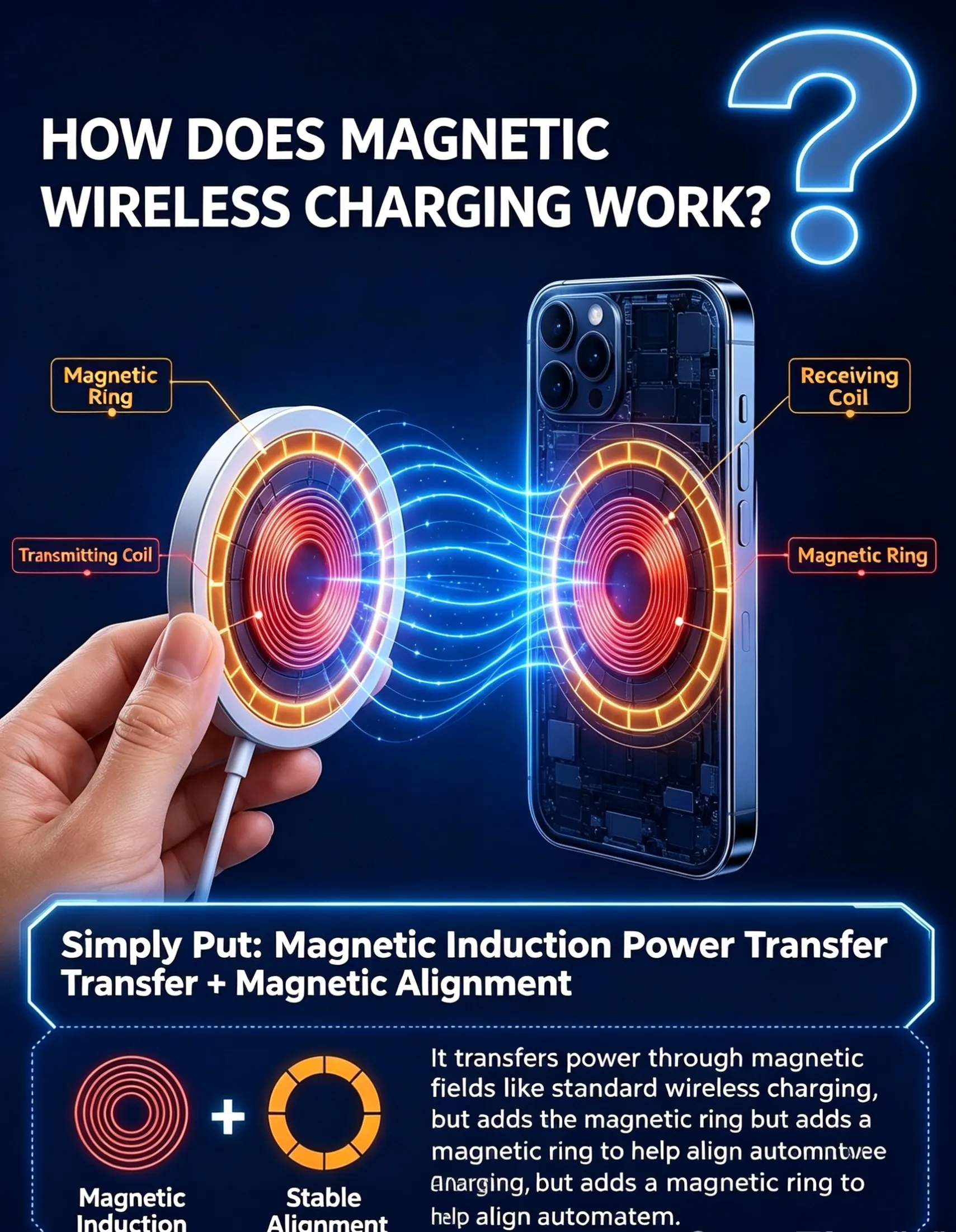
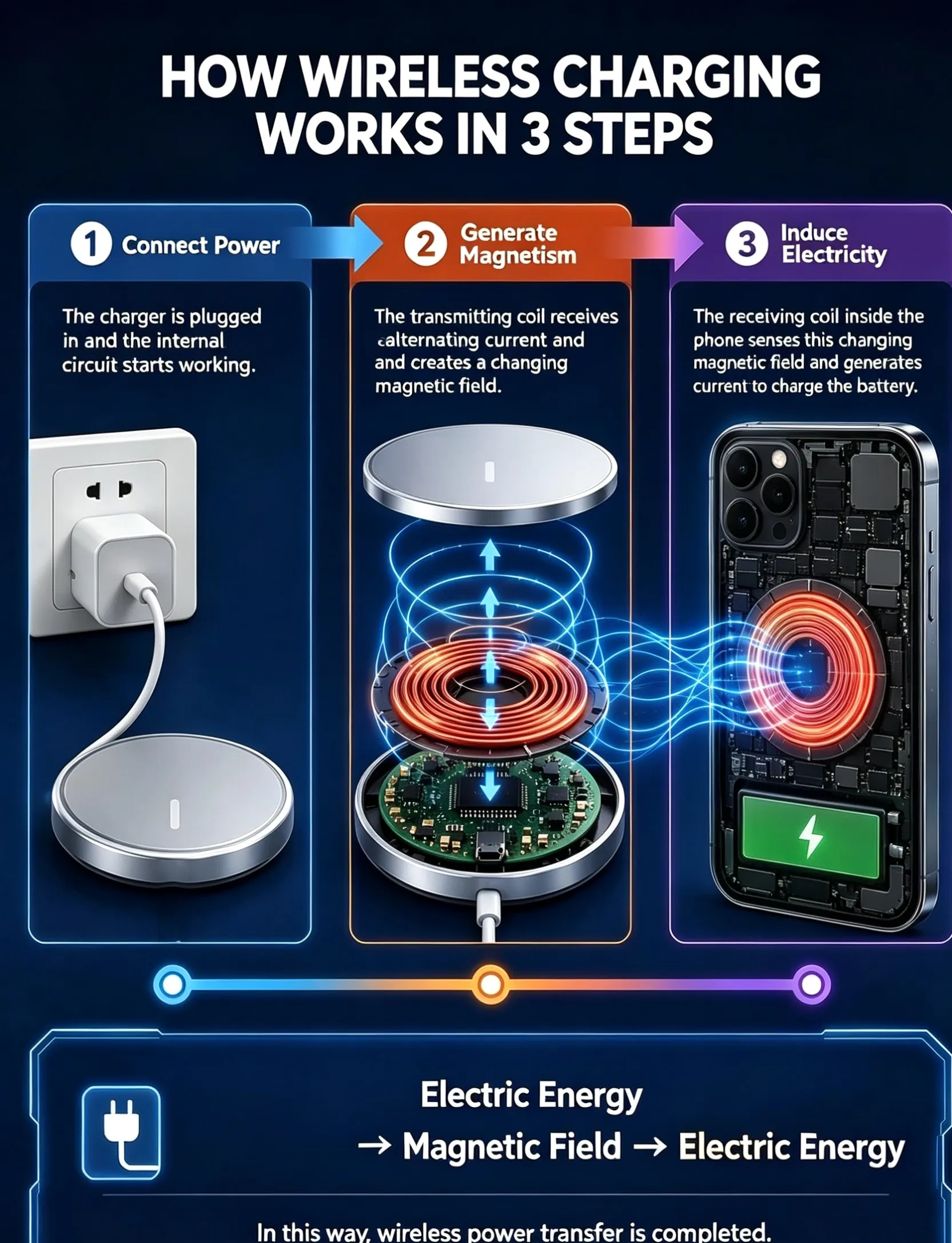
Magnetic wireless charging operates on the principle of electromagnetic induction — a well-established physics concept that's now powering millions of devices worldwide. Here's how it works:
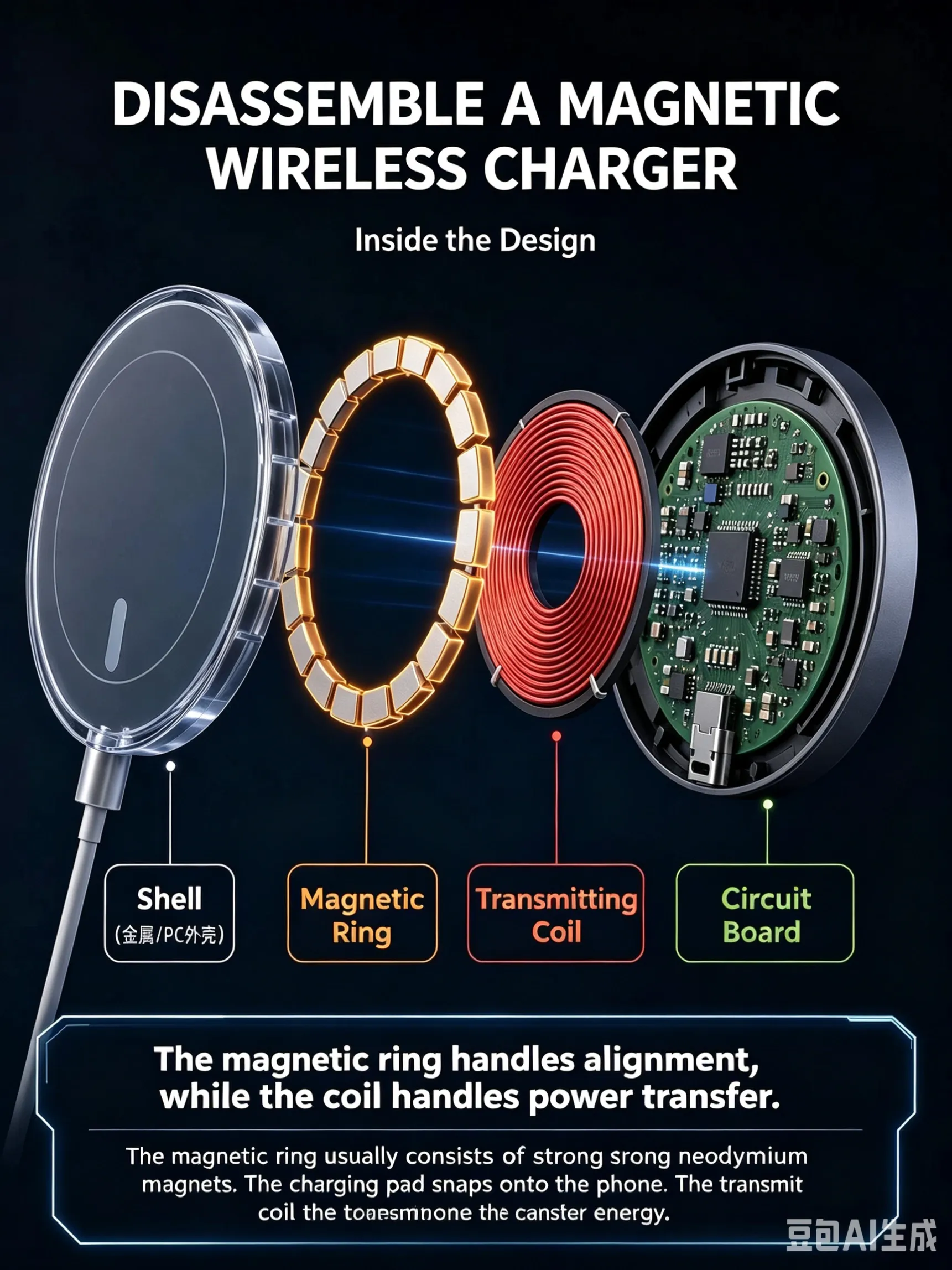
The Transmitter Side: The charging pad contains a copper coil connected to an AC power source. When electricity flows through this coil, it generates an oscillating magnetic field.
The Receiver Side: Your phone contains a matching receiver coil. When placed within the magnetic field (typically within a few centimeters), the varying magnetic field induces an electric current in the receiver coil, which charges the battery.
The Magnetic Advantage: Traditional wireless charging has long struggled with a critical issue: alignment. Even a slight misalignment between the transmitter and receiver coils can significantly reduce charging efficiency and generate excess heat. Magnetic charging solves this by integrating ring-shaped magnets (often N52-grade neodymium) that automatically snap the device into perfect alignment, ensuring optimal power transfer every time.
Wireless vs. Wired: Understanding the Trade-offs
Speed Comparison
Let's be direct: wired charging remains significantly faster.
Charging Method | Typical Power | 0–50% Charge Time | 0–100% Charge Time |
|---|---|---|---|
Wired Fast Charging | 20–30W | ~25–35 minutes | ~70–90 minutes |
Qi2 Wireless (15W) | 15W | ~45 minutes | ~90–120 minutes |
Basic Qi (7.5W) | 7.5W | ~90 minutes | ~3–4 hours |
Efficiency and Heat
Wireless power transmission inherently suffers from energy losses — typically 40–50% more energy consumption from the wall compared to wired charging for a full charge. This wasted energy manifests as heat, which can potentially impact battery longevity if not properly managed.
However, modern Qi2 chargers incorporate advanced thermal management, including cooling fans and temperature control systems, to maintain safe operating temperatures.
The Qi2 Revolution: A Game-Changer
The wireless charging industry has been fragmented for years, but that's changing rapidly. Qi2 — the latest standard from the Wireless Power Consortium — represents a transformative leap forward.
Key Qi2 Advancements:
- Magnetic Power Profile (MPP): Built-in magnetic alignment based on Apple's MagSafe technology, ensuring perfect coil alignment every time
- 15W Standard Power: Doubling the speed of older 7.5W Qi chargers
- Qi2 25W: The newest iteration delivers nearly 70% more power, rivaling wired charging speeds
- Universal Compatibility: With Apple's official adoption of Qi2 (starting iPhone 16 series), the market is finally unifying under a single standard
Market Momentum
As of January 2026, over 1.5 billion Qi2-enabled devices have shipped, with 2,665 certified products available. The global wireless charging market is projected to reach $42 billion by 2026, with Qi2 products capturing the premium segment.
Who Should Use Wireless Charging?
Best Use Cases for Wireless Charging:
✅ Desk and nightstand charging — drop and go convenience without fumbling for cables
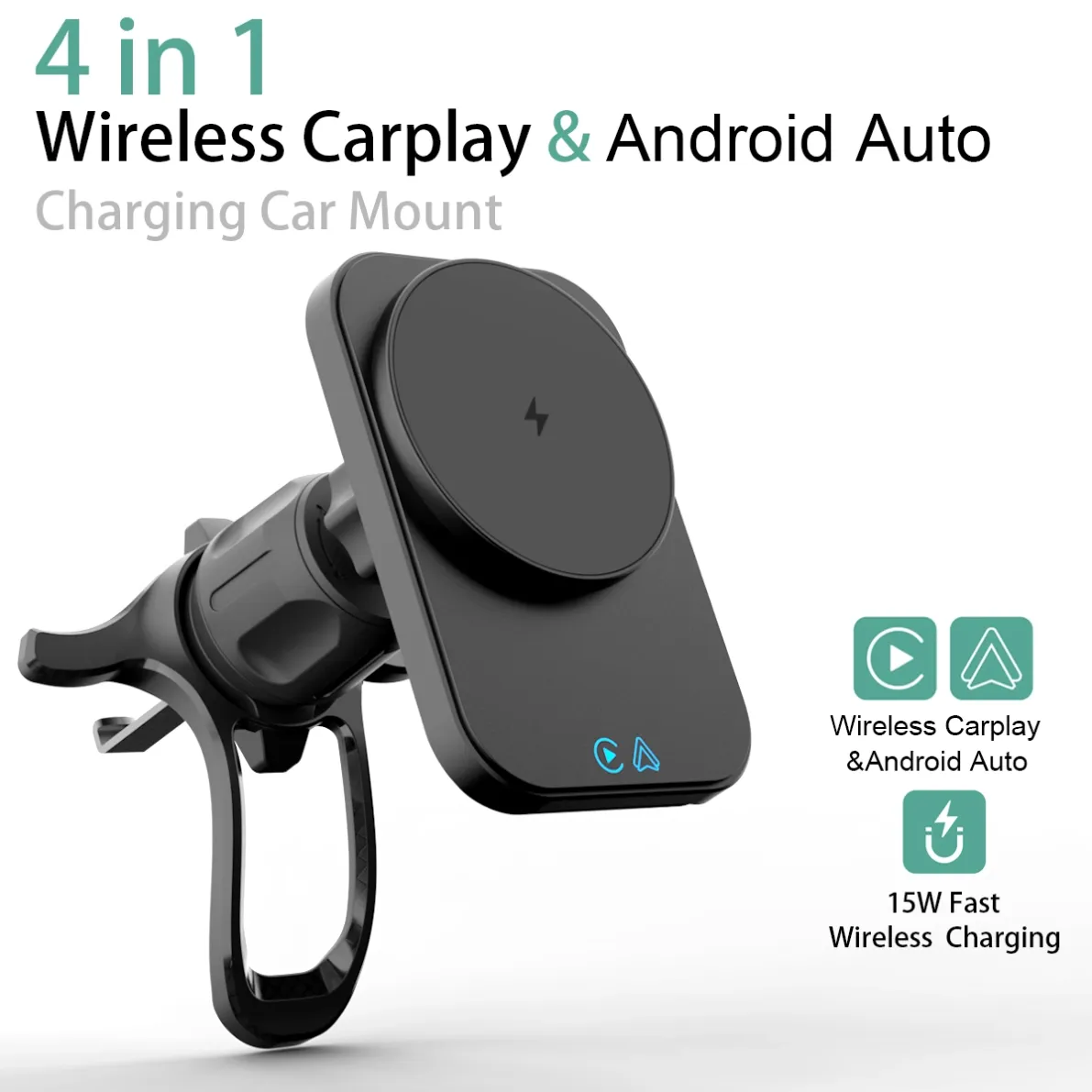
✅ In-vehicle use — magnetic mounts keep phones secure and charged during navigation
✅ Office environments — frequent pick-up/put-down scenarios where convenience matters more than speed
✅ Battery port preservation — reduces wear on physical charging ports
When Wired Charging Is Still Better:
❌ Emergency top-ups — wired charging delivers more charge per minute
❌ Travel — compact wired chargers and power banks are more portable
❌ Gaming or intensive use — heat management is easier with wired charging
❌ When you need a full charge in under an hour — wired still wins for speed
Compatibility Checklist
Before purchasing a magnetic wireless charger, verify:
- Your vehicle already supports wired CarPlay or Android Auto — the adapter converts wired to wireless, it cannot add CarPlay functionality
- Your phone supports Qi2 or MagSafe — iPhone 12 and newer support MagSafe; Android phones may require a MagSafe-compatible case
- Your phone's wireless charging wattage — not all devices support Qi2 25W yet; current compatible devices include Google Pixel 10 Pro XL and iPhone 17 series
The Bottom Line
Magnetic wireless charging isn't about replacing wired charging — it's about adding convenience where it matters most. The technology delivers "good enough" speed for everyday scenarios while eliminating cable clutter and the hassle of precise alignment.
As Qi2 continues to roll out and more devices adopt the standard, wireless charging will only become more compelling. For now, the smart approach is to use wireless for convenience and wired for speed — having both options ready ensures you're covered in any situation.
🔌 Have you made the switch to wireless charging? Share your experience in the comments below!